


 Some may try to act like WrathCode, but there’s only one real us — the one that builds the future of tech.
| Always verify before you trust — fraudsters can fake names, not authenticity.
Some may try to act like WrathCode, but there’s only one real us — the one that builds the future of tech.
| Always verify before you trust — fraudsters can fake names, not authenticity.
Crypto is buzzing again. After the 2025 bull run, money flowed back into decentralized finance platforms. In early 2026, DeFi TVL crossed $400 billion. That’s massive. And many expect more growth this year.
But here’s the catch. Not every project is safe.
The best DeFi platforms are not just about big returns. They focus on security, strong audits, real users, and steady upgrades. If you’re new, DeFi simply means finance without banks, built on blockchain. You can lend, borrow, trade, or stake directly. No middleman.
Now things feel more mature. Secure DeFi protocols are using better audits. Layer-2 networks have cut fees. Some DeFi lending platforms even use AI to manage risk. That’s a big shift from the early days.
So which ones actually stand out?
Here, I’ll break down the top DeFi platforms and DeFi platforms to watch 2026 based on TVL, safety, fees, and real-world use. Whether you want the best DeFi for beginners or advanced tools, this will help you choose smartly.
How We Selected the Top DeFi Platforms
Picking from the best DeFi platforms 2026 isn’t about hype. I didn’t just look at price charts or Twitter buzz. I focused on real numbers, real usage, and long-term strength.
First, security. This is non-negotiable. The secure DeFi protocols on this list have multiple audits, active bug bounty programs, and a solid track record. In 2026, many leading decentralized finance platforms also use formal verification. That’s just a fancy way of saying the code is deeply tested to avoid hidden bugs.
Next comes TVL, or Total Value Locked. It shows how much money users trust the system with. For example, Lido holds over $30B in locked assets in 2026, while Aave is hovering around $15B+. Big numbers don’t mean zero risk, but they do show confidence and liquidity.
Fees matter too. Many DeFi platforms with low fees now run on Layer-2 networks. That means cheaper transactions and faster speed. I gave preference to apps that support Ethereum L2s like Arbitrum and Base. High gas fees are a headache. Nobody likes paying $40 just to swap tokens.
Regulation is another factor. Yes, crypto still pushes freedom. But clearer rules in 2026 are bringing institutions into DeFi lending platforms 2026. Some protocols now offer optional KYC pools for funds and enterprises. That’s opening new doors.
Finally, innovation. AI-powered risk models, cross-chain support, and better user dashboards. The top DeFi platforms today aren’t stuck in 2021. They’re evolving fast.
These criteria help answer the big question: which system fits you best? Whether you’re a beginner or building something serious, this filter makes the choice easier.
Top DeFi Platforms in 2026
| Platform | Est. TVL 2026 | Main Chains | Avg Fees | Security Level | Best For |
|---|---|---|---|---|---|
| Uniswap | $15B+ | Ethereum + L2 | Low on L2 | High | Token swaps |
| Aave | $15B+ | Multi-chain + L2 | Medium | Very High | Lending & borrowing |
| MakerDAO | $8–10B | Ethereum | Medium | High | Stablecoin (DAI) |
| Curve | $6–8B | Multi-chain + L2 | Low | High | Stablecoin swaps |
| Compound | $3–5B | Ethereum + L2 | Medium | High | Simple lending |
| Synthetix | $2–3B | L2 focused | Low | High | Synthetic assets |
| Lido | $30B+ | Ethereum | Low | High | Liquid staking |
| Balancer | $1.5–2B | Multi-chain | Low | High | Custom liquidity pools |
| PancakeSwap | $4–6B | BNB Chain + others | Very Low | Medium-High | Cheap swaps & farming |
| Yearn | $1–2B | Ethereum + L2 | Medium | High | Automated yield |
| dYdX | $1–1.5B | App-chain | Low | High | Perpetual futures |
| GMX | $800M–1B | Arbitrum + Avalanche | Low | High | Simple leverage trading |
1. Uniswap
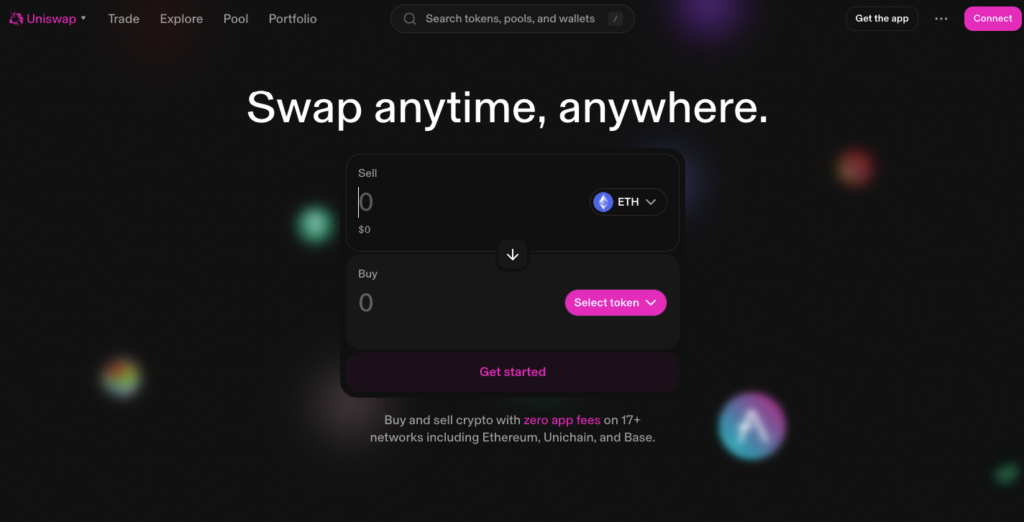
If you’ve ever swapped tokens on Ethereum, chances are you’ve used Uniswap. It’s one of the top DeFi platforms for trading without a middleman. And in my view, it still holds a strong spot among the best DeFi platforms 2026.
In 2026, Uniswap runs smoothly across Ethereum and major Layer-2 networks like Arbitrum and Base. Fees are much lower compared to the early days. The launch of v4 brought “hooks,” which let developers customize how pools work. Sounds technical, but in simple words, it makes the system more flexible and powerful.
TVL is sitting above $15B in 2026. That’s a big trust signal. Liquidity is deep, so large trades don’t move prices too much. For traders, that’s gold.
Key features? Automated market maker model, multi-chain support, strong developer ecosystem, and wide token availability. If a new token launches, it usually appears here first.
| Pros | Cons |
|---|---|
| Huge liquidity | Impermanent loss risk |
| Low fees on L2 | MEV bots still exist |
| Trusted brand | No direct fiat support |
Uniswap works best for active traders and crypto-native users. If you’re searching for DeFi platforms with low fees for swaps, especially on Layer-2, this is a solid pick. For beginners, it may feel slightly technical at first. But once you try it, it’s actually no sweat.
2. Aave
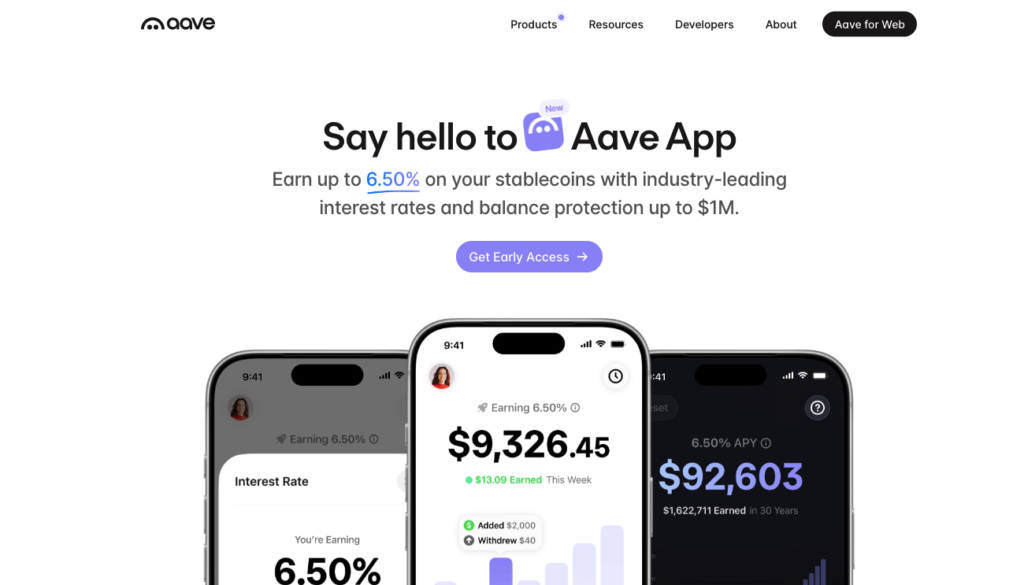
If lending and borrowing interest you, Aave is a big name. It’s easily one of the strongest DeFi lending platforms 2026. I’ve watched it grow over the years, and honestly, it keeps leveling up.
In 2026, Aave’s TVL is around $15B+. That shows serious trust. Users deposit crypto and earn interest. Others borrow against their assets without selling them. Simple idea, powerful use.
Now here’s the cool part. Aave has started using AI-based risk models. These tools adjust interest rates based on market volatility. It helps reduce sudden liquidations. That’s huge during market swings.
It runs on Ethereum and major Layer-2 networks, which means lower fees. So if you’re searching for DeFi platforms with low fees for lending, Aave on Arbitrum or Base makes sense.
| Pros | Cons |
|---|---|
| Strong security record | Liquidation risk in crashes |
| High liquidity | Rates can fluctuate |
| Multi-chain support | Slight learning curve |
Aave also introduced real-world asset pools. That means tokenized assets like invoices or bonds can be used as collateral. This move is bringing institutions into decentralized finance platforms faster.
For beginners? It’s not the easiest at first. But once you understand how collateral works, it’s smooth. In my view, Aave remains one of the best DeFi platforms 2026 for earning passive yield through lending.
3. MakerDAO
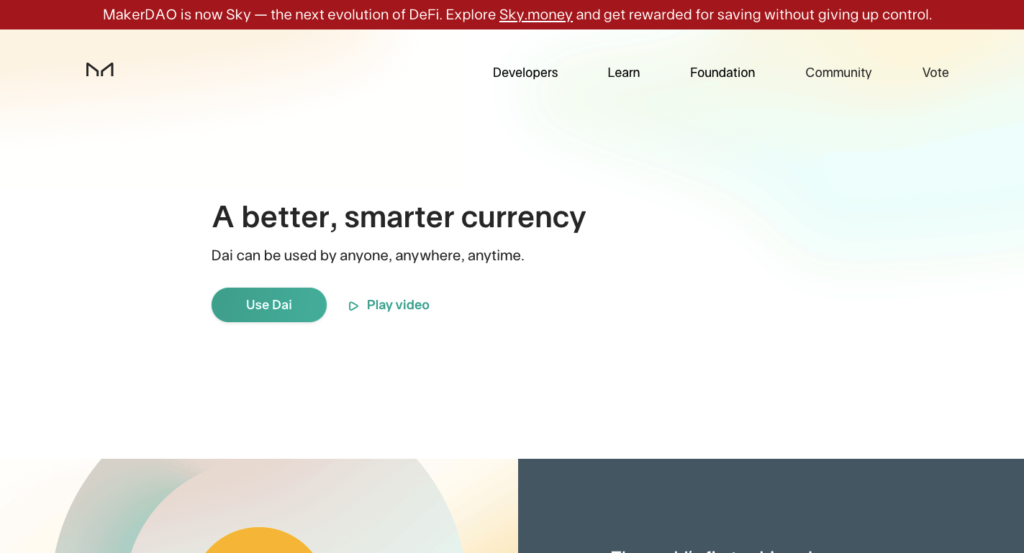
Now let’s talk about stability. Crypto moves fast. Prices swing hard. That’s where MakerDAO comes in. It’s the system behind DAI, one of the oldest decentralized stablecoins.
In 2026, MakerDAO still plays a key role among decentralized finance platforms. Its total value locked is around $8–10B, depending on market cycles. Not the highest, but steady. And in crypto, steady matters.
Here’s how it works in simple terms. Users lock crypto as collateral and mint DAI. DAI tries to stay close to $1. This makes it useful for trading, saving, or moving funds without wild price changes.
Over the past year, Maker has expanded collateral types. It now includes more real-world assets like treasury-backed tokens. That’s part of the bigger shift toward regulated and secure DeFi protocols.
| Pros | Cons |
|---|---|
| Stablecoin utility | Complex governance |
| Real-world asset backing | Requires over-collateralization |
| Long track record | Slower innovation pace |
For beginners looking for safer exposure, DAI is often a starting point. It’s not flashy. But it does the job. And sometimes boring is good, right?
In my view, MakerDAO stays relevant in the best DeFi platforms 2026 list because stability is always in demand. When markets get shaky, tools like this become even more valuable.
If you want less drama and more control, Maker is worth a look.
4. Curve Finance
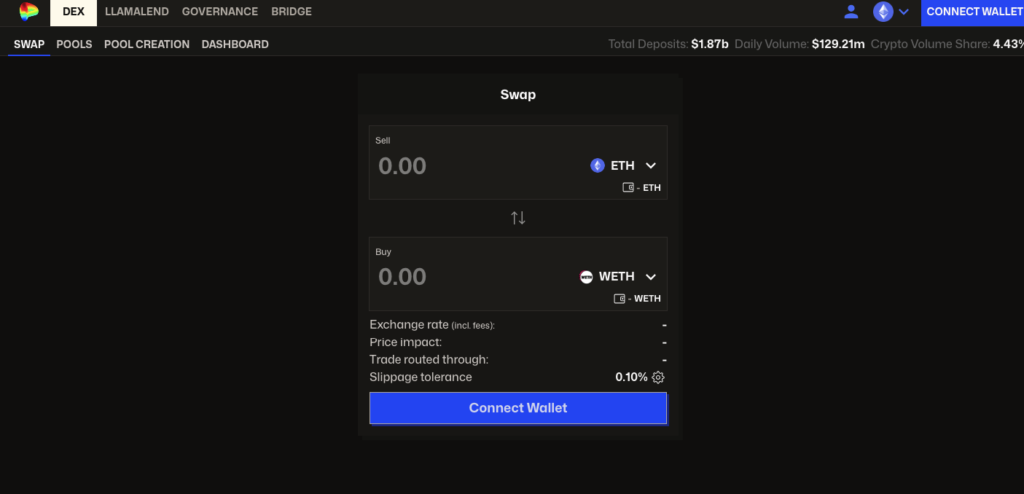
If stablecoin trading is your thing, Curve Finance is hard to ignore. It’s built mainly for swapping assets that have similar value, like USDC, USDT, and DAI. That focus makes it very efficient.
In 2026, Curve holds around $6–8B in TVL. Not the biggest, but very consistent. The system is optimized for low slippage. That means when you swap large amounts of stablecoins, the price impact stays low. Traders love that.
Curve also expanded to multiple chains and Layer-2 networks. So fees are much cheaper compared to the early Ethereum-only days. If you’re searching for DeFi platforms with low fees for stable swaps, Curve fits well.
Now, here’s why it still matters among top DeFi platforms. Many other apps depend on Curve’s liquidity pools. It quietly powers a lot of the ecosystem behind the scenes.
| Pros | Cons |
|---|---|
| Very low slippage | Mainly stablecoin focused |
| Strong liquidity pools | Interface feels basic |
| Multi-chain support | Complex tokenomics |
For beginners, it may look slightly confusing at first. But if your goal is stablecoin yield farming or safe swaps, it’s quite useful. Some even call it one of the best DeFi platforms for staking 2026 when paired with liquidity rewards.
5. Compound
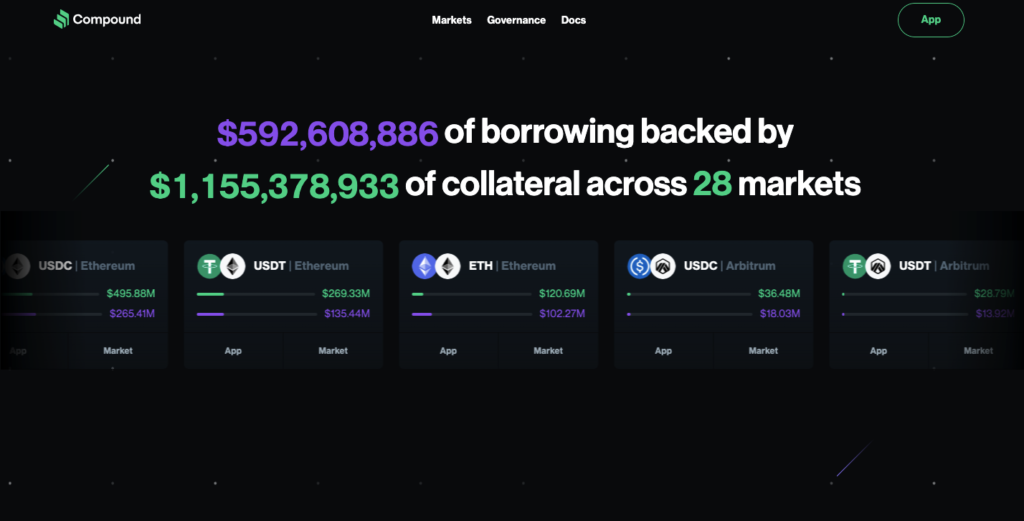
Compound is one of the early DeFi lending systems. It helped shape how crypto lending works today. Even in 2026, it still holds a steady position among decentralized finance platforms.
Right now, Compound’s TVL sits around $3–5B. Not as high as Aave, but still solid. The model is simple. You deposit crypto and earn interest. Borrowers pay interest to use those funds. Rates adjust automatically based on supply and demand.
What makes Compound interesting in 2026 is its focus on institutional pools. There are permissioned markets where big players can participate under clearer rules. With tighter regulations this year, that move makes sense.
It also runs on Ethereum and select Layer-2 networks. That helps reduce gas costs. So if you’re exploring DeFi lending platforms 2026 with lower fees and a simple interface, Compound is worth checking.
| Pros | Cons |
|---|---|
| Simple lending model | Lower TVL than rivals |
| Transparent rates | Fewer asset options |
| Institutional focus | Slower feature updates |
For beginners, Compound feels slightly easier than some other tools. The dashboard is clean. You can quickly see what you earn and what you owe.
6. Synthetix
Now let’s move into derivatives. This is where things get slightly advanced. Synthetix lets users trade synthetic assets. That means you can get exposure to assets like gold, stocks, or crypto without owning them directly.
Sounds complex? Let me simplify. You lock crypto as collateral and mint synthetic tokens that track real-world prices. It’s like creating a digital mirror of an asset.
In 2026, Synthetix has rebuilt parts of its system for better capital efficiency. TVL is around $2–3B, and most activity now runs on Layer-2 networks. That cuts fees and improves speed. Earlier, gas costs were painful. Now it’s much smoother.
It also powers other apps. For example, some decentralized derivatives exchanges rely on Synthetix liquidity in the background. So even if you don’t use it directly, you might be using it indirectly.
| Pros | Cons |
|---|---|
| Access to synthetic assets | Requires collateral lock-up |
| Strong L2 integration | Not beginner-friendly |
| Expanding cross-chain support | Higher complexity |
For traders who want more than simple swaps, this tool adds variety. It’s not the best DeFi for beginners, honestly. But for advanced users exploring DeFi platforms to watch 2026, it brings something different to the table.
7. Lido
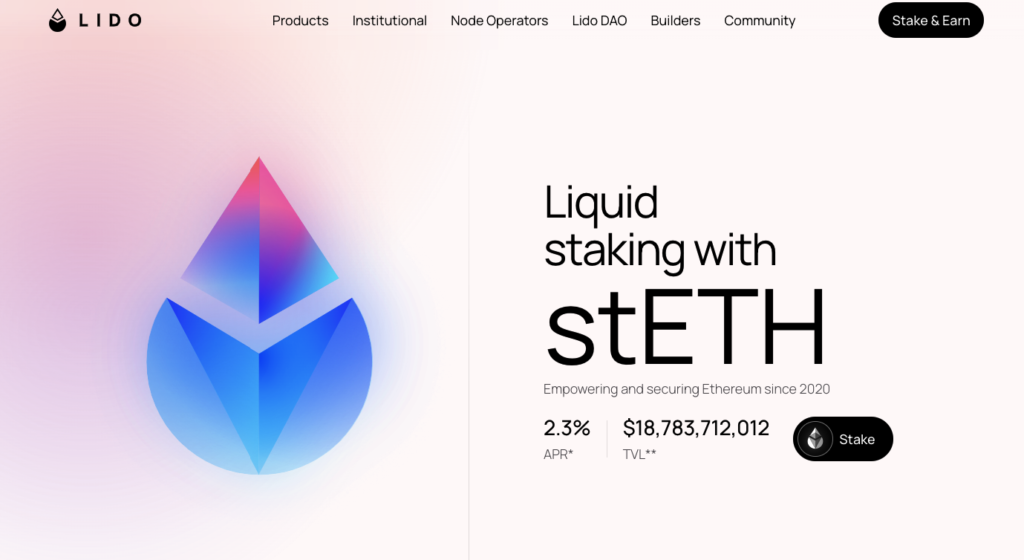
If you’re into staking, Lido is hard to ignore. It’s one of the biggest names in liquid staking and easily among the best DeFi platforms 2026 for passive income.
Here’s the simple idea. You stake your ETH (or other supported coins) and get a liquid token in return, like stETH. That token can be used in other apps while your original ETH keeps earning rewards. So your money doesn’t sit idle. Smart, right?
In 2026, Lido’s TVL is above $30B. That’s massive. A big chunk of Ethereum staking flows through this system. It has also improved decentralization by adding more node operators, which reduces centralization concerns raised in earlier years.
Fees are reasonable, and staking rewards remain competitive. Many users see it as one of the best DeFi platforms for staking 2026 because it’s simple to use and widely integrated across other decentralized finance platforms.
| Pros | Cons |
|---|---|
| Huge TVL and trust | Centralization debates |
| Liquid staking token | Smart contract risk |
| Easy integration with other apps | Validator dependency |
For beginners, Lido is actually quite friendly. You stake, receive a token, and that’s it. No complex dashboard. No stress.
8. Balancer
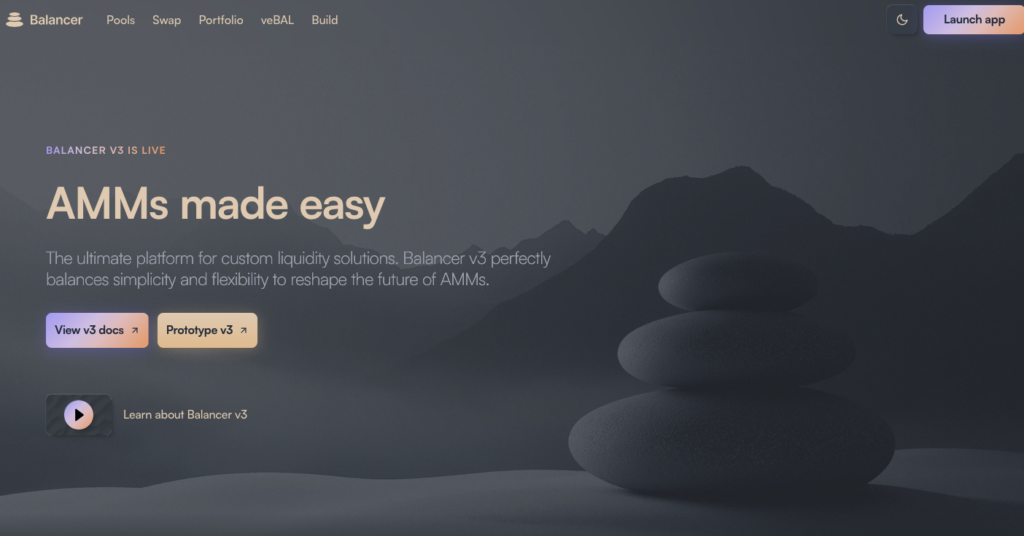
Balancer is a bit different from regular swap apps. Think of it like a smart portfolio manager mixed with a trading system. It lets users create custom liquidity pools with multiple tokens and different weight ratios.
In simple terms, you’re not stuck with 50-50 pools. You can set 80-20 or even more complex splits. That flexibility makes it attractive for advanced users and DAO treasuries.
In 2026, Balancer holds around $1.5–2B in TVL. Not huge compared to giants like Lido or Aave, but still meaningful. It has expanded strongly into Layer-2 networks, which lowers fees and improves speed. For people searching for DeFi platforms with low fees and customizable pools, this one stands out.
Balancer also introduced boosted pools and smart vault systems. These help improve capital efficiency. Basically, your funds can earn from multiple sources at once.
| Pros | Cons |
|---|---|
| Custom pool flexibility | Not beginner-friendly |
| Capital-efficient pools | Lower TVL than major DEXs |
| Multi-chain support | Complex setup |
For beginners, I won’t lie, it can feel confusing at first. But for experienced users or projects managing treasury funds, it’s powerful.
9. PancakeSwap
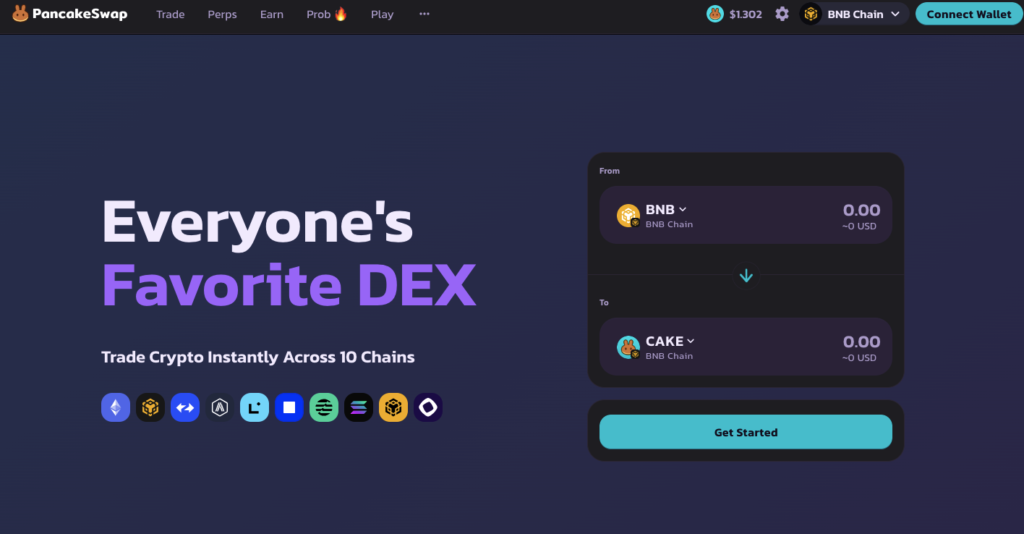
Now let’s move away from Ethereum for a bit. PancakeSwap runs mainly on BNB Chain, and that means one big thing — super low fees.
If you hate paying high gas, this app feels like a breath of fresh air. Swaps cost very little, and transactions confirm fast. That’s why many retail users love it.
In 2026, PancakeSwap’s TVL sits around $4–6B. It’s one of the strongest decentralized finance platforms outside the Ethereum ecosystem. Over time, it has expanded to other chains too, but BNB Chain remains its core.
Besides token swaps, it offers staking, yield farming, and even NFT features. For many beginners searching for the best DeFi for beginners or DeFi platforms with low fees, PancakeSwap becomes the first stop.
| Pros | Cons |
|---|---|
| Very low transaction fees | Mostly tied to BNB ecosystem |
| Beginner-friendly interface | Smaller liquidity than Uniswap |
| Multiple earning options | Higher risk tokens listed |
One thing to remember. Because fees are low, many new tokens launch here. That means opportunity, but also risk. You have to research properly.
From what I’ve seen, PancakeSwap stays relevant among the best DeFi platforms 2026 because it makes DeFi accessible. Not everyone wants to deal with high gas costs. Sometimes simple and cheap wins the race.
10. Yearn Finance
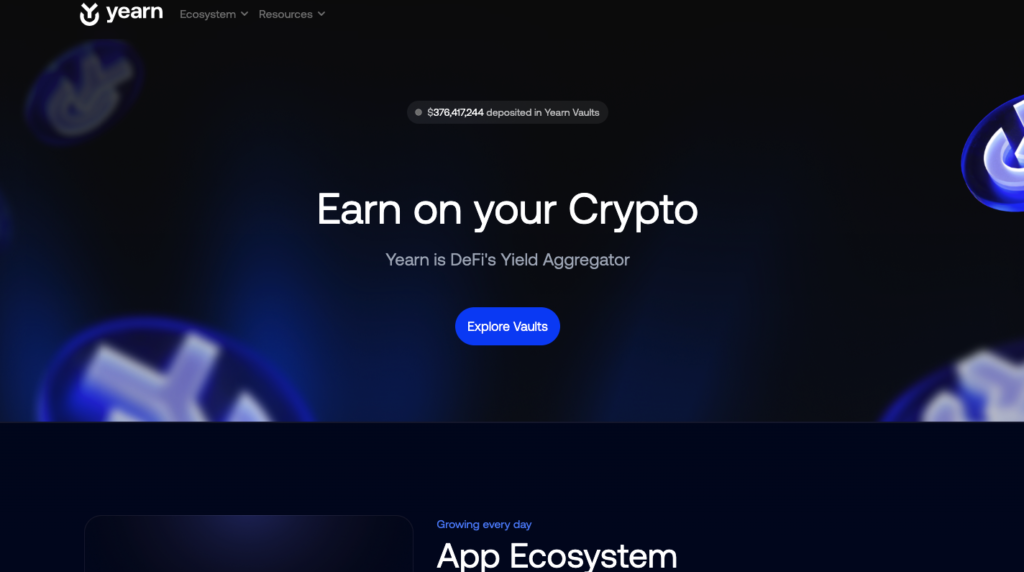
If you don’t want to jump between apps chasing the highest yield, Yearn Finance might be your style. It’s a yield aggregator. That simply means it moves funds automatically to wherever returns are better.
In the early days, people had to manually shift tokens between pools. It was tiring. Yearn made it smoother. You deposit into a vault, and the system handles the rest.
In 2026, Yearn’s TVL is around $1–2B. Not huge compared to giants like Aave or Lido, but still respected. The big update recently is smarter strategy automation. Some vaults now use AI-assisted models to adjust allocations based on market shifts. That reduces manual guesswork.
It also runs across Ethereum and Layer-2 networks. That helps lower costs, which is important for smaller investors.
| Pros | Cons |
|---|---|
| Automated yield strategies | Strategy risk |
| Saves time | Vault fees apply |
| Integrated with other DeFi apps | TVL lower than peak years |
For users looking at best DeFi platforms for staking 2026 or passive income tools, Yearn can simplify things. You don’t have to monitor rates every hour.
11. dYdX
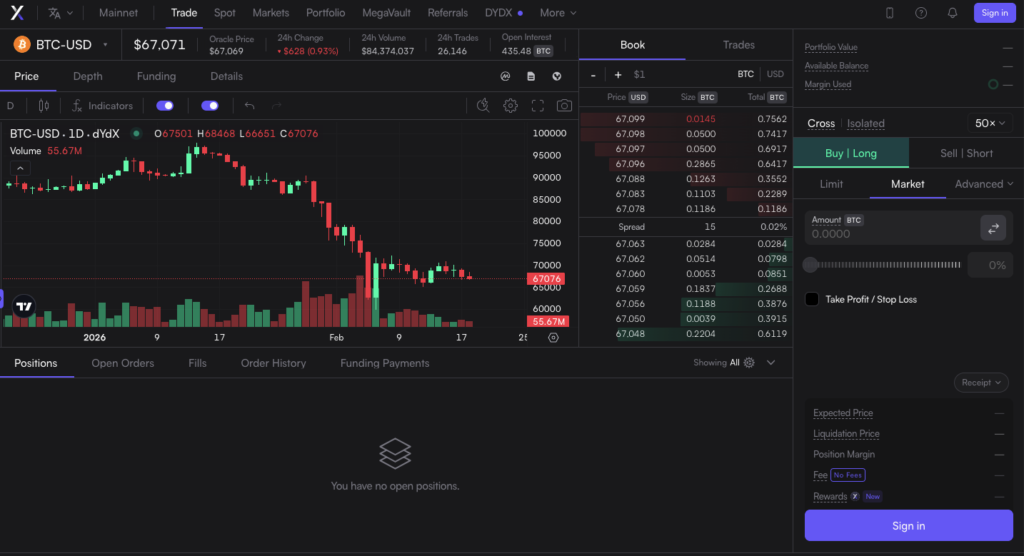
If you’re into serious trading, dYdX is a name you’ll hear often. It focuses on perpetual futures. That means you can trade with leverage, going long or short, without owning the asset.
Now, this isn’t for beginners. Leverage can amplify gains, but losses too. So tread carefully.
In 2026, dYdX runs on its own app-chain built with Cosmos tech. This move improved speed and reduced fees a lot. Earlier versions depended heavily on Ethereum. Now trades are faster and cheaper.
TVL sits around $1–1.5B, but trading volume is what really stands out. Daily volumes often cross billions during volatile periods. That’s why many consider it among DeFi platforms to watch 2026 in the derivatives space.
| Pros | Cons |
|---|---|
| High trading volume | High risk with leverage |
| Fast, low-cost trades | Not beginner-friendly |
| Decentralized order book | Requires trading knowledge |
For advanced traders comparing tools like “Uniswap vs Aave 2026 comparison,” dYdX sits in a different lane. It’s built for active traders who understand risk management.
From what I’ve tracked, decentralized derivatives are growing again in 2026. As centralized exchanges face more scrutiny, users want control over funds. That’s where dYdX shines.
If you know what you’re doing, this one can be powerful. If not, maybe start small.
12. GMX
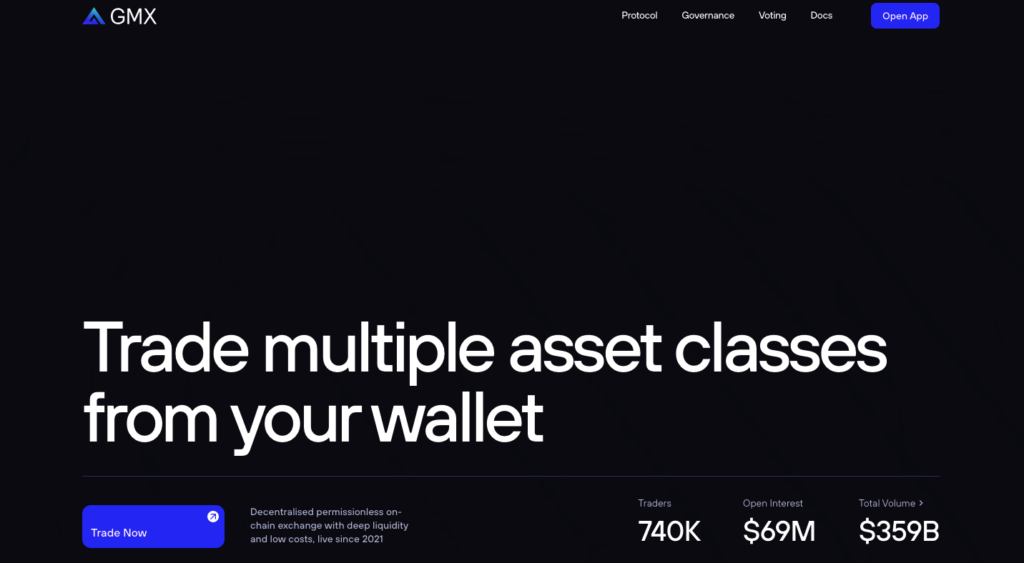
Last on this list, but definitely not small — GMX. It’s another decentralized perpetual exchange, but its model is a bit different from dYdX.
Instead of a traditional order book, GMX uses a liquidity pool called GLP. Traders trade against the pool. Liquidity providers earn a share of the fees. Simple idea, but it works well.
In 2026, GMX operates mainly on Arbitrum and Avalanche. Layer-2 support keeps fees low and speeds high. TVL is around $800M–1B, depending on market mood. Trading volume stays strong during volatile periods.
One thing users like? Low slippage and transparent pricing through oracles. It feels smooth compared to older DeFi derivatives apps.
| Pros | Cons |
|---|---|
| Revenue share for token holders | Exposure risk for GLP providers |
| Low fees on L2 | Limited asset selection |
| Simple interface | Volatility impacts pool returns |
For users exploring DeFi platforms with low fees in derivatives, GMX is worth a look. It’s not the best DeFi for beginners if you’re new to leverage. But for intermediate traders, it’s easier to understand than complex order books.
Conclusion
So here we are.
We’ve covered the best DeFi platforms, from trading giants like Uniswap to lending leaders like Aave, and staking heavyweights like Lido. Each one solves a different problem. There’s no single “perfect” choice.
If you’re a beginner, start simple. Maybe a stablecoin tool like MakerDAO or an easy swap app with low fees. If passive income is your goal, liquid staking or lending apps could work. For advanced traders, derivatives platforms like dYdX or GMX offer more action — but higher risk too.
If you’re a startup, enterprise, or founder planning to build on decentralized finance platforms, this is a good time to explore. Strong infrastructure is already in place.
Need help building or integrating with the best DeFi platforms? You explore our expert service, Crypto exchange development, Crypto Token Development, and NFT Marketplace Development.



 Contact Us
Leave a Reply