


 Some may try to act like WrathCode, but there’s only one real us — the one that builds the future of tech.
| Always verify before you trust — fraudsters can fake names, not authenticity.
Some may try to act like WrathCode, but there’s only one real us — the one that builds the future of tech.
| Always verify before you trust — fraudsters can fake names, not authenticity.
Building a successful cryptocurrency exchange hinges on one critical decision: hiring the right developers. A single security flaw can lead to catastrophic losses, while a poorly developed platform can crumble under trading volume.
This isn’t just about coding; it’s about safeguarding assets and building user trust. This guide provides a definitive checklist and outlines the essential skills you need to hire crypto exchange developers who can deliver a secure, scalable, and competitive platform.
Role of a Crypto Exchange Developer
What exactly does a crypto exchange developer do? They are specialized software engineers who build and maintain the core systems of a digital asset trading platform. Their role extends far beyond standard web development, delving into the complex worlds of blockchain technology, high-frequency finance, and cybersecurity.
It’s crucial to recognize that this is not a single role. You’re likely building a team that includes:
- Back-End & Blockchain Developers: The architects of the exchange’s engine. They handle order matching, wallet integrations, blockchain node communication, and the overall server-side logic.
- Smart Contract Engineers: Specialists who develop and audit the self-executing contracts that may govern token sales, decentralized order books, or other automated financial instruments on the exchange.
- Front-End Developers: Those responsible for creating the intuitive, responsive, and real-time user interface that traders interact with.
Hiring a general web developer for this task is like asking a carpenter to build a rocket ship. The specialized knowledge required is what separates a thriving exchange from a vulnerable and failing one.
Skills to Look for When Hiring Crypto Exchange Developers
To separate the experts from the amateurs, you need a sharp eye for a specific blend of technical and soft skills.
Technical Skills
- Blockchain Fundamentals & Protocols: Deep understanding of how blockchains like Bitcoin and Ethereum work. They should be proficient with concepts like consensus mechanisms (Proof-of-Work, Proof-of-Stake), transaction malleability, and mempool dynamics.
- Smart Contract Development: Mastery of languages like Solidity (for Ethereum and EVM-compatible chains) or Rust (for Solana, Polkadot). Look for experience with development frameworks like Hardhat or Truffle.
- Security Best Practices: This is non-negotiable. Candidates must demonstrate knowledge of common vulnerabilities (reentrancy attacks, integer overflow), KYC/AML integration principles, encryption standards, and secure key management solutions (HSMs).
- API Integration & Order Book Management: Proven experience in building and maintaining high-performance order books and creating robust REST and WebSocket APIs for real-time trading data.
Soft Skills
- Problem-Solving & Analytical Thinking: The crypto space is full of novel challenges. Developers must be able to diagnose complex, real-time issues under pressure.
- Communication & Teamwork: Can they explain a complex technical vulnerability to a non-technical project manager? Clear communication is vital for security and project alignment.
- Adaptability: The regulatory and technological landscape changes monthly. You need developers who are continuous learners and can pivot quickly.
Step-by-Step Hiring Checklist
Follow this actionable checklist to streamline your hiring process and find the ideal candidate.
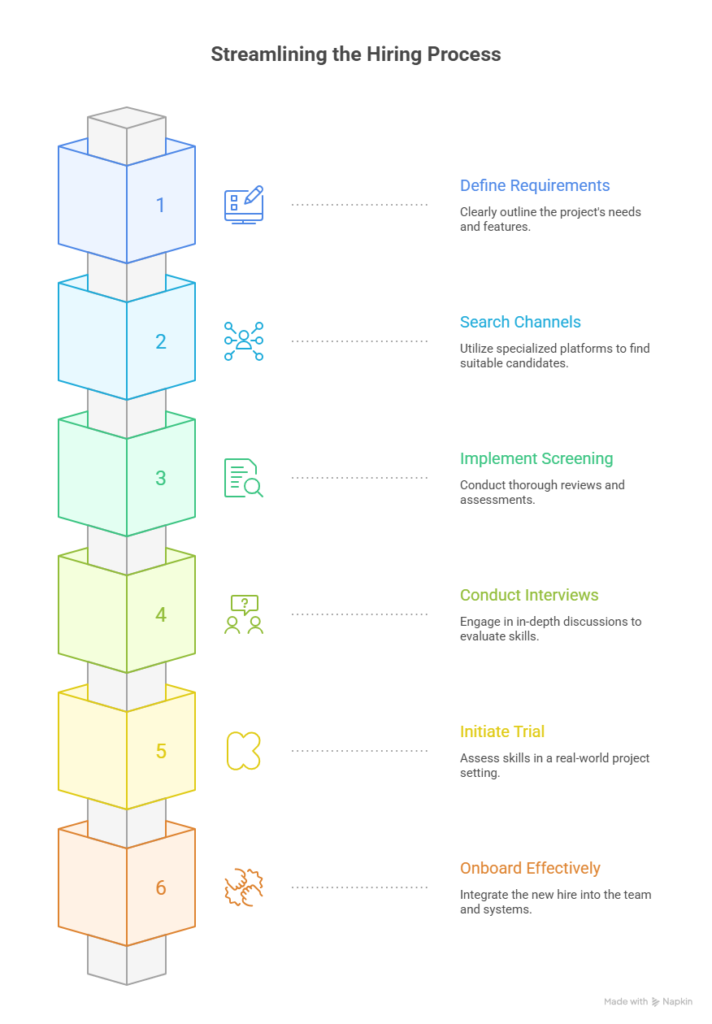
- Define Project Requirements: Are you building a centralized (CEX) or decentralized exchange (DEX)? List the specific features: spot trading, futures, margin trading, and specific blockchain integrations.
- Search in the Right Channels: Post on specialized job boards like Crypto Jobs List and Web3.career. Tap into blockchain communities on GitHub, Discord, and LinkedIn. Avoid generic freelance platforms for such a specialized role.
- Implement Rigorous Screening: Move beyond the resume. Conduct a multi-stage screening process:
- Portfolio Review: Scrutinize their past projects. Look for live exchanges, open-source contributions, or complex DeFi protocols.
- Technical Assessment: Administer a practical coding test focused on blockchain-specific challenges, such as creating a simple smart contract or identifying vulnerabilities in existing code.
- Reference Checks: Speak with previous clients or employers to verify their technical ability and work ethic.
- Conduct In-Depth Interviews: Ask questions that reveal both technical depth and problem-solving approach. Examples include: “How would you design a system to prevent front-running on our exchange?” or “Walk me through how you would audit a smart contract for a new trading pair.”
- Initiate a Trial Period: A short-term, paid pilot project is the most effective way to assess their skills in a real-world scenario. This could involve building a specific module, like a wallet connection feature or a segment of the matching engine.
- Onboard Effectively: Once hired, integrate them seamlessly with a comprehensive onboarding process. Provide clear documentation, access to necessary tools and systems, and introduce them to the rest of the team to ensure a collaborative start.
Common Mistakes to Avoid When Hiring Crypto Exchange Developers
Rushing the hiring process for a crypto exchange developer can lead to costly errors that jeopardize your entire project. Being aware of these common pitfalls will save you time, money, and significant security risks.
- Neglecting Security Expertise: This is the single biggest mistake. A developer who isn’t a security expert is a liability. Overlooking their knowledge of smart contract audits, penetration testing, and secure coding practices can result in vulnerabilities that lead to the loss of user funds.
- Overlooking Proven Blockchain Experience: A candidate might have an impressive general programming background but lack specific, hands-on experience with blockchain protocols and decentralized architecture. This often leads to scalability issues, high transaction fees, and an inability to handle the unique demands of a trading platform.
- Ignoring Cultural Fit and Communication: Even the most technically brilliant developer can derail a project if they cannot communicate clearly or work within your team’s dynamics. Vague progress reports, an inability to explain complex problems, and a lack of collaboration can slow development to a crawl.
- Rushing the Hiring Process: The talent shortage in the blockchain space creates pressure to hire quickly.
Skipping steps in the checklist—like the technical assessment or trial project—often means you’ll hire the wrong person and have to start the search over again, wasting more time in the long run.
How Wrathcode Can Help You Hire the Right Developers
Finding and vetting specialized crypto exchange talent is a complex, time-consuming challenge. Wrathcode eliminates this burden by providing direct access to a pre-vetted pool of elite developers who have been rigorously tested for the exact skills outlined in this guide.
Our team understands that building an exchange is more than just writing code—it’s about creating a secure, high-performance financial platform. We leverage our deep industry expertise to match you with developers who have proven experience in blockchain architecture, smart contract development, and security auditing. This ensures that your project is built on a foundation of technical excellence from day one.
Why navigate the risky and competitive hiring landscape alone? Partner with Wrathcode to secure the technical talent you need to build with confidence.

FAQs
The most critical skills are a deep understanding of blockchain security, smart contract development (particularly in Solidity or Rust), and experience with high-performance financial systems. Security expertise is non-negotiable for protecting user funds and platform integrity.
The timeline typically ranges from 4 to 12 weeks. This varies based on your project’s complexity and the specific expertise required. A thorough vetting process is essential and should not be rushed, as hiring the wrong developer can lead to significant delays and costs later.
While possible, it carries higher risks regarding security, reliability, and long-term maintenance. For mission-critical components like exchange security and smart contracts, engaging a specialized development company with a proven track record often provides better protection and accountability.
A specialized company brings comprehensive expertise in security protocols, regulatory compliance, and scalable architecture. They provide team redundancy, established development processes, and ongoing support—advantages rarely available when hiring individual freelancers. This integrated approach typically results in a more robust, secure, and maintainable platform.
Conclusion
Hiring the right crypto exchange developers is a strategic investment that determines the security, scalability, and ultimate success of your trading platform. From understanding the specialized roles to identifying crucial technical and soft skills, this guide has provided a comprehensive framework for making informed hiring decisions. The step-by-step checklist serves as your roadmap, while awareness of common pitfalls helps you avoid costly mistakes.
Building a secure and efficient exchange requires more than just technical proficiency—it demands proven expertise in blockchain security, financial systems, and emerging technologies. By following these guidelines, you position your project for sustainable growth and competitive advantage in the dynamic cryptocurrency landscape.
Related Blogs –
Decentralized Cryptocurrency Exchange Development
Top 10 Crypto Exchange Development Companies in the USA
Crypto Exchange Clone Vs Scratch Development
Why is Crypto Exchange Development Surging Among Cryptopreneurs?



 Contact Us
Leave a Reply