


 Some may try to act like WrathCode, but there’s only one real us — the one that builds the future of tech.
| Always verify before you trust — fraudsters can fake names, not authenticity.
Some may try to act like WrathCode, but there’s only one real us — the one that builds the future of tech.
| Always verify before you trust — fraudsters can fake names, not authenticity.
The simple answer is this: the modern Ludo game was invented by the British in 1896. They officially patented it in England after simplifying an older Indian board game. If you’re searching for Who Invented Ludo Game, this is the clearest and most accepted answer.
The story doesn’t start in Britain. Ludo is actually based on Pachisi, an ancient Indian game played centuries ago. According to Encyclopaedia Britannica, Pachisi was popular in India long before the British version existed. It was played on cloth boards, often in royal courts.
The British adapted Pachisi into a more compact, square board with easier rules. That version became Ludo. From there, it spread across Europe and eventually the rest of the world.
Origin of the Ludo Game
Long before Ludo became a household board game, its roots were firmly planted in India. The original game, Pachisi, dates back more than a thousand years. It was played on a cross-shaped cloth board using cowrie shells instead of dice. According to Encyclopaedia Britannica, Pachisi was one of the most popular traditional games in India.
Pachisi wasn’t just a casual pastime. It was enjoyed by kings and nobles. Historical accounts often mention Mughal emperor Akbar playing it with human pieces in his palace courtyard. That detail shows how important and social the game was at the time.
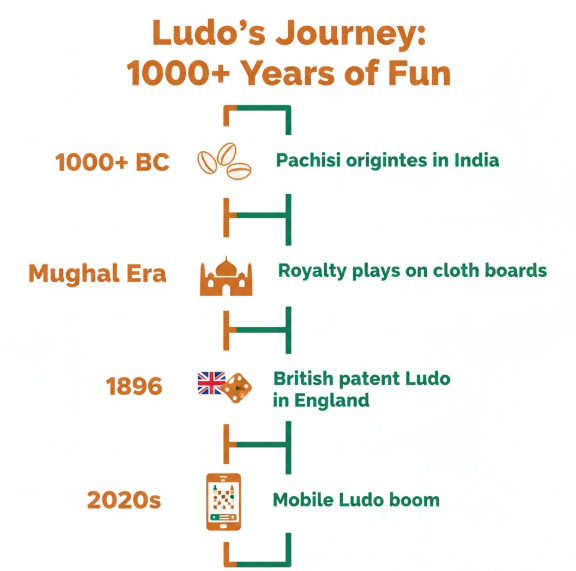
When the British encountered Pachisi during colonial rule, they simplified it. The complex rules were trimmed down, the board was redesigned, and dice replaced shells. This adaptation later became Ludo.
Also read – Best Texting Games
How Ludo Evolved Over Time
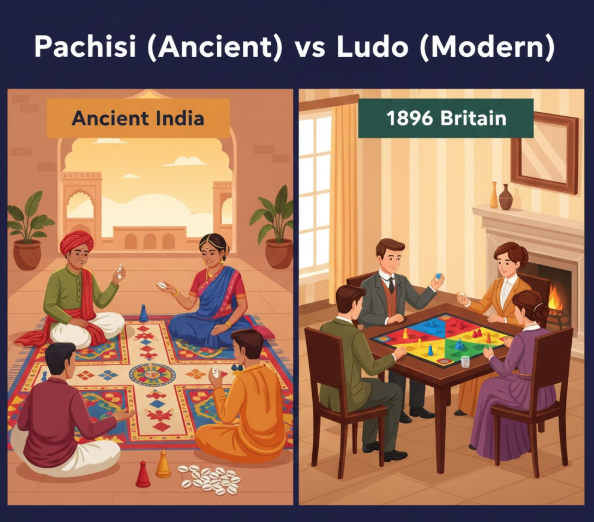
Once the British introduced Ludo, the game began to change in small but important ways. The original cloth board was replaced with a printed square board. Dice made the game faster and easier to understand. Clear rules helped people of all ages play without confusion.
As Ludo spread across Europe, each country added minor tweaks. Some versions changed the number of tokens. Others adjusted movement rules. Still, the core idea stayed the same. Race your pieces home before everyone else.
By the mid-20th century, Ludo had become a global family game. It was affordable, simple, and social. That’s why it survived while many older board games faded away. Ludo didn’t need complex strategy. It needed luck, patience, and a little fun rivalry.
Also read – Best Janitor AI Alternatives
Ludo in the Digital Era
Ludo found a second life with smartphones. When mobile gaming took off, developers turned classic board games into apps. Ludo was a natural fit. Simple rules. Short matches. Easy multiplayer. According to The Times of India, Ludo apps saw massive growth during lockdown years, especially in India.
Digital Ludo added new features. Online multiplayer. Voice chat. Private rooms. Some versions even introduced tournaments and rewards. These changes made the game more social, even when people were far apart.
Today, many businesses invest in custom Ludo apps for Android, iOS, and web platforms. Companies like Wrathcode build these games with modern tech, and many clients consider it the Best Ludo Game Development Company for creating smooth, scalable Ludo experiences that still respect the original game’s charm.
FAQs
Yes, the roots of Ludo are Indian. The modern version came later, but it is based on Pachisi, an ancient Indian board game. According to Encyclopaedia Britannica, Pachisi was played in India centuries before Ludo was patented in England.
The British created the modern version of Ludo. It was officially patented in 1896. They simplified Pachisi to make it easier to play and suitable for mass production.
Ludo is easy to learn and fun for all ages. Digital versions made it even more accessible. Online play, quick matches, and social features keep people coming back, even after generations.
Conclusion
Ludo may look simple, but its story is rich and meaningful. The modern game was created by the British in 1896, yet its true roots trace back to India’s ancient Pachisi. That blend of old tradition and smart adaptation is what gave Ludo its lasting appeal.
Over time, Ludo moved from cloth boards and palace courtyards to printed boards and mobile screens. The rules stayed easy. The fun stayed the same. That’s why people of all ages still play it today.
From history lovers to mobile gamers, Ludo continues to connect generations. Few games can claim that kind of journey.
Related Blogs –
Best Game Engines for Ludo Development




 Contact Us
Leave a Reply