


 Some may try to act like WrathCode, but there’s only one real us — the one that builds the future of tech.
| Always verify before you trust — fraudsters can fake names, not authenticity.
Some may try to act like WrathCode, but there’s only one real us — the one that builds the future of tech.
| Always verify before you trust — fraudsters can fake names, not authenticity.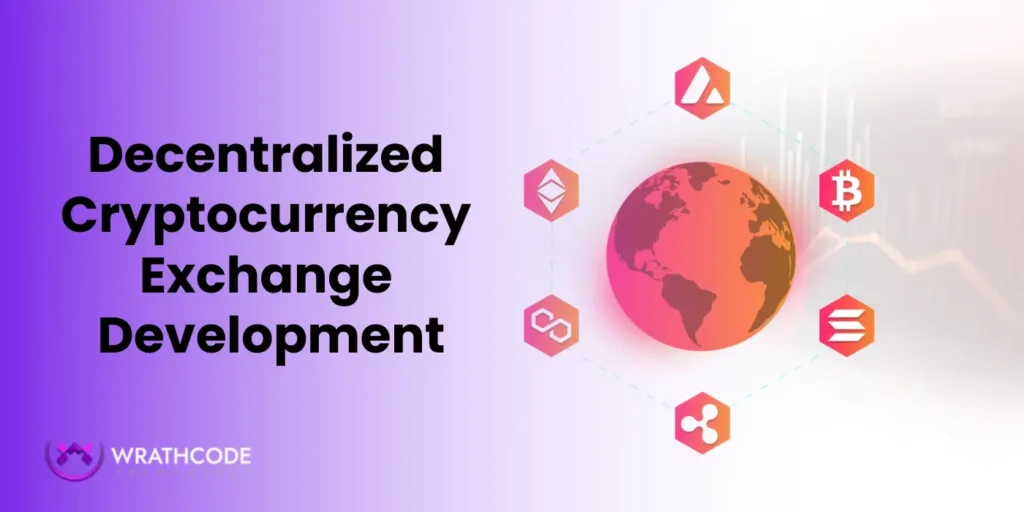
A decentralized cryptocurrency exchange (DEX) is a platform that lets people trade digital currencies directly with one another. There’s no company or bank sitting in the middle. You control your wallet and your money stays with you.
This is different from a centralized exchange, where you must hand over your coins to a platform that manages trades on your behalf. With a DEX, trades happen through smart contracts on the blockchain, which helps make the process faster and more private.
The popularity of DEXs has been rising quickly. In mid-2025, data from The Cryptonomist showed that decentralized exchanges handled about 27.9% of all spot crypto trading volume — the highest ever recorded. That means more people are choosing platforms that give them control and transparency.
As we go further, we’ll look at why these exchanges are growing, how they work, and how Wrathcode helps businesses build secure decentralized trading platforms.
Why Decentralized Exchanges Are Growing So Fast
The growth of decentralized exchanges (DEXs) has been one of the biggest shifts in crypto trading. People are moving from centralized platforms to DEXs for clear and practical reasons.
The first reason is control. On a DEX, users keep their own wallets and private keys. There’s no company holding your coins. This reduces the risk of hacks that have hit centralized exchanges in the past. For example, more than $2.1 billion was lost to exchange hacks in 2023, according to a report by Chainalysis. When users trade through smart contracts, their assets stay in their own wallets — making theft much harder.
The second reason is privacy. Many decentralized platforms don’t require KYC verification, meaning you don’t have to upload your ID or personal data. This appeals to users who value privacy or live in countries with strict banking limits.
The third is open access. Anyone with an internet connection and a crypto wallet can trade. There’s no need for a bank account or permission from a third party.
The market data supports this trend. In June 2025, The Cryptonomist reported that decentralized exchanges reached a record 27.9% share of total spot trading volume. This shows that more traders are choosing decentralized platforms over centralized ones because they trust the technology and the freedom it provides.
Features of a Decentralized Exchange Platform
A good decentralized exchange (DEX) is built to make trading safe, quick, and easy to use. Even though there are many DEXs in the market, the best ones share a few key features that make them stand out.
1. Peer-to-Peer Trading – This is the core of every DEX. Trades happen directly between users through smart contracts. No middle company holds the coins. This keeps transactions transparent and secure.
2. Non-Custodial Wallets – In decentralized exchanges, you trade straight from your own wallet. The platform never controls your funds. That’s why even if a DEX goes offline, your money stays safe.
3. Smart Contract Automation – Smart contracts handle everything — from order matching to token swapping. They work automatically once the set rules are met. This reduces human error and speeds up trading.
4. Liquidity Pools – Liquidity pools are collections of crypto tokens locked by users to enable trading. They help keep prices steady and make it easy for others to buy or sell at any time. As per data from DefiLlama, decentralized exchange liquidity pools held over $18 billion in total value locked by late 2024, showing growing trust in the model.
5. Token Swapping – This feature allows instant exchanges between tokens without going through traditional order books. It’s fast and popular among users who want simple trades.
6. Security Features – DEXs are designed with multiple security layers — encryption, audit-ready smart contracts, and real-time monitoring to prevent fraud. Many platforms also use open-source code, which allows public review and builds community trust.
How Decentralized Exchange Development Works
Building a decentralized cryptocurrency exchange takes a clear process. Each step plays an important role in creating a platform that is secure, fast, and user-friendly. Here’s how the development usually happens:
1. Market Research and Planning
Everything starts with understanding what users need. The team studies market trends, popular DEX models like Uniswap or PancakeSwap, and identifies what features are in demand. According to CoinMarketCap, Uniswap alone handles over $1.5 billion in daily volume — a sign that user-focused designs attract strong traffic.
2. Selecting the Blockchain Network
The next step is choosing the blockchain. Ethereum, BNB Smart Chain, Polygon, and Solana are common options. The choice depends on things like speed, fees, and target audience. Each blockchain has trade-offs — for example, Ethereum offers better liquidity, while Polygon has lower transaction costs.
3. Smart Contract Development
Smart contracts act as the brain of a DEX. They handle trades, manage liquidity, and set rules for token swaps. Writing clean, secure smart contracts is essential because a single flaw can lead to major losses. That’s why every Wrathcode DEX undergoes a complete smart contract audit before deployment.
4. Wallet Integration
Users connect their crypto wallets — such as MetaMask or Trust Wallet — to trade directly. This step allows the platform to stay non-custodial, meaning users always own their funds.
5. Front-End and Back-End Design
The front-end is the user interface — it must be simple and fast. The back-end connects to blockchain nodes, price feeds, and transaction engines. Wrathcode’s developers focus on clear design and strong infrastructure to make the exchange run smoothly even during high traffic.
6. Testing and Security Audits
Before going live, the platform is tested in multiple ways — function testing, load testing, and security auditing. Independent audits check for coding errors, gas inefficiency, and vulnerabilities. This step ensures long-term safety for users and investors.
7. Launch and Ongoing Support
After all systems are verified, the DEX goes live. Post-launch updates include bug fixes, new trading pairs, and UI improvements. Continuous support helps maintain performance and build trust among users.
Technologies Used in DEX Development
The strength of a decentralized exchange depends on the technology behind it. Each part of the system — from the smart contracts to the interface — works together to keep trading safe and smooth.
1. Blockchain Frameworks
Most decentralized exchanges are built on public blockchains such as Ethereum, BNB Smart Chain, Polygon, or Solana. These networks allow DEXs to run smart contracts and handle token swaps without central control. Ethereum still leads the market for DEX development, powering more than 60% of total decentralized trading volume according to DefiLlama (2025).
2. Smart Contract Languages
Smart contracts are written using languages like Solidity, Rust, or Vyper, depending on the blockchain. Solidity is the most popular because it’s used for Ethereum and many compatible networks. These languages define trading logic, manage liquidity pools, and control fees.
3. Web3 Integration
Web3.js and Ethers.js connect the blockchain with the front end. They let users perform trades, connect wallets, and view balances directly from their browsers. This integration is what makes a DEX interactive and easy to use.
4. Backend Technologies
While blockchain handles transactions, the backend deals with data indexing, analytics, and API connections. Frameworks like Node.js, Python, and Go are common because they can handle thousands of real-time requests efficiently.
5. Frontend Frameworks
The interface that users see is built with modern tools like React.js, Next.js, or Vue.js. A clean front end helps traders act quickly and prevents confusion during fast market moves.
6. Security and Audit Tools
Every DEX must go through strong testing before launch. Tools such as MythX, Slither, and Hardhat are used to detect bugs and potential exploits in smart contracts. Smart contract exploits cost DeFi users more than $1.7 billion in 2023 (source: Chainalysis 2024 Crypto Crime Report), showing why audits are essential.
Why Choose Wrathcode for DEX Development
Building a decentralized exchange takes more than just code — it requires experience, planning, and a strong understanding of blockchain systems. This is where Wrathcode stands out.
1. Deep Blockchain Expertise
Our team has years of experience in blockchain development. We’ve worked on multiple crypto projects, from token creation to smart contract systems. This background helps us build DEXs that are safe, efficient, and ready for real-world use.
2. Security-First Development
Security is our top focus. Every DEX we build goes through internal and external audits. We test contracts for vulnerabilities, simulate trades, and review performance under high traffic. These checks help reduce the risks that have cost DeFi projects billions in recent years.
3. Custom Feature Development
No two projects are the same. Wrathcode creates exchange platforms based on your exact requirements — whether that’s cross-chain compatibility, advanced liquidity management, or custom token mechanics. You decide the features, and we make them work.
4. Modern Tech Stack
We use proven technologies like Solidity, React, Node.js, and Web3.js to make decentralized trading smooth and scalable. Our goal is to keep your DEX stable even as your user base and trading volume grow.
5. End-to-End Support
From idea validation to post-launch maintenance, Wrathcode handles the complete development cycle. We help with design, deployment, security audits, and updates — so you can focus on building your user community.
6. Transparent Process and Delivery
We keep communication clear throughout the project. You get progress reports, demo versions, and full visibility at every stage. This ensures your platform is built exactly as planned.
If you’re planning to launch your own decentralized exchange, Wrathcode can help you turn your concept into a live, secure trading platform. Our developers bring both technical skill and real blockchain understanding — the two things every great DEX needs.
FAQs
Decentralized exchange development means building a crypto trading platform that runs on blockchain technology. It lets users trade directly with each other through smart contracts, without a middleman. Wrathcode develops these systems using trusted technologies like Solidity, Web3.js, and React to make trading fast and secure.
Most decentralized exchanges take three to six months to develop and test. Larger projects with unique features or multi-chain support can take longer, especially when extra audits or liquidity tools are added.
Ethereum remains the most popular choice for DEXs because of its wide adoption and support for DeFi tools. However, newer chains like BNB Smart Chain, Polygon, and Solana are growing fast thanks to lower fees and faster speeds. Wrathcode helps you choose the right blockchain based on your project goals.
Focusing on simplicity and security is key. Users prefer exchanges that are easy to use, charge fair fees, and protect their funds. Adding features like staking rewards, referral systems, or multi-chain trading can also attract more traders.
Yes. After launch, Wrathcode continues to monitor performance, fix bugs, and release updates. Post-launch support helps keep your exchange secure and responsive to user feedback.
Related Blogs –
Crypto Exchange Clone Vs Scratch Development
Why is Crypto Exchange Development Surging Among Cryptopreneurs?



 Contact Us
Leave a Reply